
Most catering advice assumes everybody eats lunch at the same time, in the same room. The largest employers in Kenosha County do not work that way. LakeView Corporate Park alone holds around 90 companies and more than 10,000 people, much of it distribution and food manufacturing, and Racine County adds more than 350 manufacturers of its own. A plant floor or a fulfillment center runs on shifts, breaks and peak seasons, and feeding it well takes a different kind of planning.
Plan by shift, not by headcount
Total headcount is the wrong starting number. Three hundred employees across three shifts is three meals for a hundred, at three different times, and possibly in three different break groups within each shift.
Ask for the roster by shift and by break window before anything else. It decides how many drops the order needs, how much food goes in each one, and whether a single meal is even possible or the event should run as a rolling service across the day.
The break is the deadline
A thirty minute break includes the walk to the break room and the walk back. If the line takes fifteen minutes, half the break has gone before anybody sits down. On a shift, how fast people get their food matters more than what is on the menu.
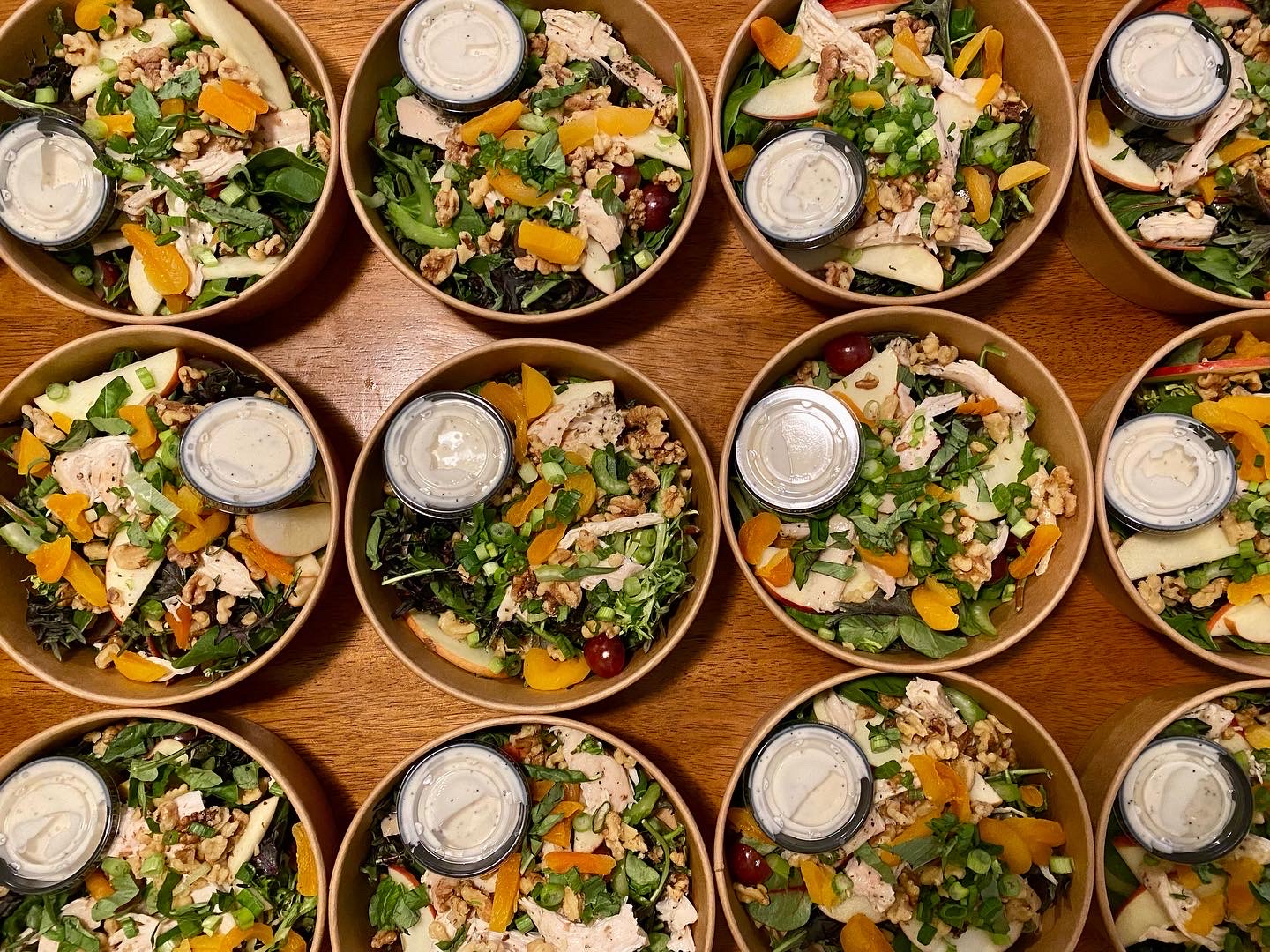
- Individually packed meals are the fastest. Each person takes one and goes. Nobody waits, and nothing runs out at the end of the line.
- A buffet gives more choice and costs time. Plan on one serving line for every 60 to 75 people in a break group, and two-sided lines for anything larger.
- Stations spread the crowd. Two or three smaller setups in different parts of a large break area move a big group faster than one long table.
Our guide to choosing a catering service style goes through each format in more detail.

Feed the night shift the same as the day shift
The most common complaint about workplace catering is that the day shift gets a hot lunch and the overnight crew gets what is left of it, or a pizza at two in the morning. If the meal is meant to thank the whole workforce, every shift should get the same food, fresh, at its own break.
That usually means a separate drop for each shift rather than holding the daytime food over. Where an overnight delivery is not practical, a meal packed and labeled for the night crew, with plain reheating instructions, is still far better than leftovers. It costs a little more to organize, and it is the part people remember.
Choose food that holds
Shift food often waits. It sits in a break room for an hour while a second group cycles through, or in a fridge until the next break. Some dishes handle that well and some fall apart.
- Holds well: grain bowls, braised meats, pasta bakes, roasted vegetables, wraps, hearty soups.
- Does not: anything fried, delicate greens dressed in advance, and anything that relies on being crisp.
Label everything with its contents and allergens. On a plant floor there is usually nobody from the caterer standing next to the food to answer questions, so the label has to do that job.
A workforce eats more widely than a boardroom
A few hundred people on a production floor bring a much wider range of diets than a dozen people around a conference table. Plan the vegetarian option in real quantity rather than two token portions, include something without pork, and ask whoever is organizing whether any religious or cultural observance falls on the date.
Appetite is different too. People doing physical work through a long shift eat more than people at desks, so plan toward the upper end of the figures in our guide to how much food per person.
Plan around peak season
For distribution and fulfillment, the fourth quarter is peak: overtime, extra shifts and temporary staff. It is when an appreciation meal means the most, and also when it is hardest to schedule, because the floor cannot stop for it.
Book before November rather than in it, and expect the headcount to move from week to week as temporary staff come and go. A caterer who knows the numbers will change can plan for a range. One who is handed a single fixed figure in October will be wrong by December.
What to send us
- Shift times and break windows
- Headcount for each shift, or each break group if they differ
- The address, and where in the building the food should go
- Whether the food can be left or needs staff with it
- Any dietary requirements you already know about
We cater across Kenosha County and the surrounding area, including LakeView Corporate Park in Pleasant Prairie and Racine. Have a look at corporate and event catering, then send us your shift pattern and we will work out how to feed everyone on it.