

A grazing table is the first thing guests see when they walk in, and it sets the tone for everything after it. It is also the single most misunderstood item on a catering menu. People ask for one meaning a charcuterie board, or order a board expecting something that fills a room. Here is what the difference actually is, how much table you need, and when a grazing table is the right call.
What is a grazing table?
A charcuterie board is a platter. It holds cured meat, cheese and a few accompaniments, it serves somewhere between two and ten people, and it gets carried to where it is needed.
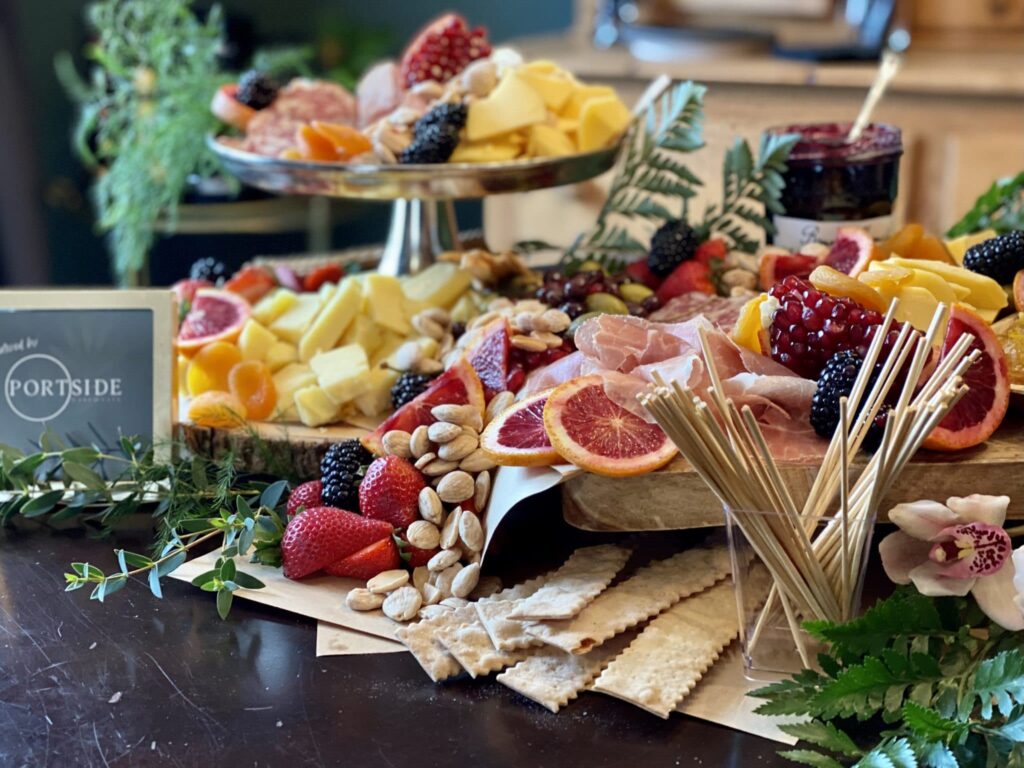
A grazing table is the surface itself. The food is built directly onto the table, usually over butcher paper, running its full length. It covers far more than charcuterie: breads, dips, roasted vegetables, fruit, nuts, olives, pastries, sometimes something warm at one end. Guests move along it rather than reaching across it.
The practical difference is scale and build time. A board is assembled in twenty minutes. A grazing table for a hundred guests takes two to three hours on site, which is why it has to be planned around your room access rather than dropped off.
How long a table do you need?
Plan the surface before the shopping list. A spread that looks abundant on eight feet looks sparse on twelve, using exactly the same food.
| Guests | Table length | Shape |
|---|---|---|
| 20 to 30 | 6 ft | One table, one side served |
| 40 to 60 | 8 to 12 ft | One long run, both sides accessible |
| 75 to 100 | 12 to 16 ft | One run, or two tables in an L |
| 150 or more | Split it | Two or three stations around the room |
Past about 150 guests, one long table stops helping. Everybody arrives at once, the line forms at the near end, and the far end goes untouched for twenty minutes. Two or three smaller stations placed apart keep the room moving and get people talking to each other instead of to the back of someone’s head.
What goes on one
A good grazing table is built in layers rather than laid out in sections. Height comes first, from boards, crates and stands, then the large items, then everything small filling the gaps. The aim is no visible paper by the time it is finished.
- Cheese. Three to five, varied by texture rather than by country. A hard, a soft, a blue and something mild covers most palates.
- Cured meat. Two or three, folded or ribboned rather than laid flat, which doubles the apparent volume.
- Bread and crackers. More than you think. This is what everything else gets eaten on.
- Something pickled or sharp. Cornichons, peppers, marinated artichokes. It cuts the richness and stops the table reading as heavy.
- Fruit. Grapes and figs for the look, berries for color, something sliced for the people avoiding cheese.
- Dips and spreads. Honey, mustard, a whipped cheese, a jam.
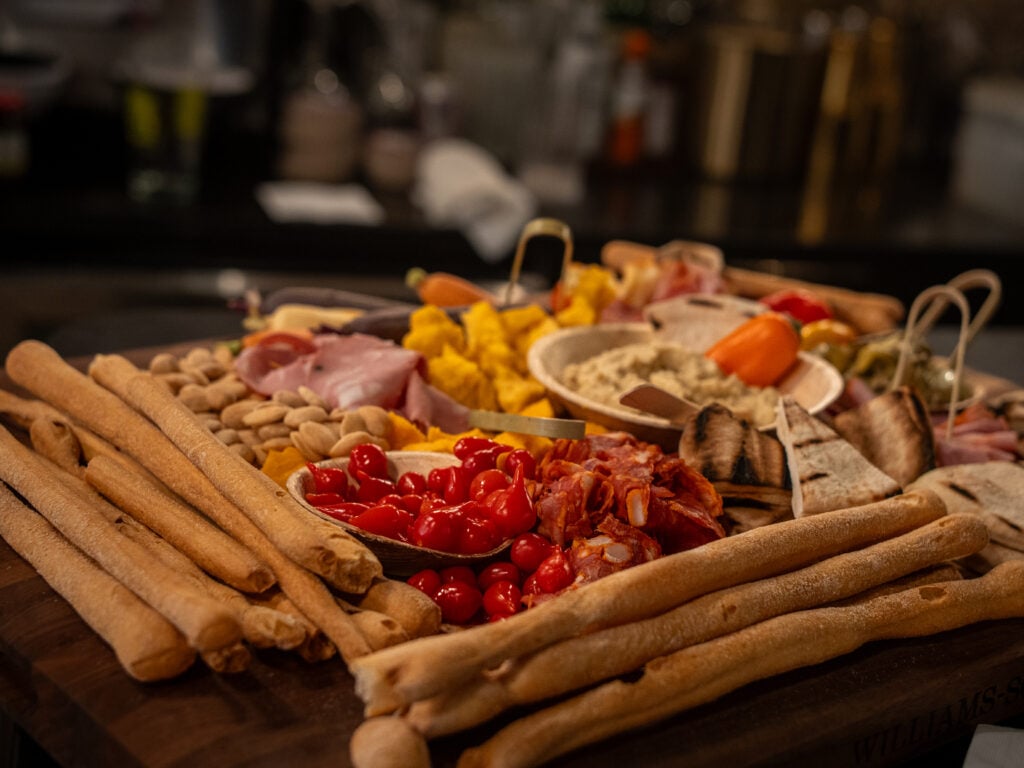
- Something warm. Optional, and it changes the table entirely. Warm bread or a baked cheese at one end makes it feel like a meal rather than a snack.
How much food per person
As a starter with a meal to follow, plan on about 2 ounces of cheese and 2 ounces of cured meat per person. As the centerpiece with no meal after it, 4 to 5 ounces of each, plus fruit, nuts, spreads and something warm.
Our guide to how much food per person covers the rest of the menu, including what changes when the event runs long or the room is standing rather than seated.
When a grazing table is the right call
- Arrivals are staggered. An open house, a retirement party, a graduation. People come and go over three hours and a table serves all of them without a service window.
- You want the room mingling. Standing guests eat more small items and talk more. A grazing table is built for that.
- Dietary needs are mixed. Everything is visible and separate, so people can see what they are eating instead of asking.
- The photographs matter. It is the most photographed item at most events we cater, by some distance.
When it is the wrong call
- Everyone sits down at once. A seated dinner with a running order wants passed appetizers, so the room stays in its chairs.
- The venue has no access window. Two to three hours of setup needs a room you can get into. If you have forty minutes between the ceremony and the reception, a table is not possible in that space.
- It is outdoors in August. Soft cheese and cured meat in direct sun have a short and unhappy life. Shade and a shorter service window, or pick something else.
- The budget is tight and the table is the whole meal. Cheese is expensive per ounce. A grazing table as the entire dinner usually costs more than a buffet of the same substance.
What drives the cost
Three things, in order. The cheese, because the gap between a domestic cheddar and an aged import is wide and it is the largest line. The labor, because two to three hours of building on site is real time. And the staging, meaning the boards, risers and linens that give the table its height, which is either a rental or something the caterer already owns.
If the quote is higher than you expected, the cheese selection is usually the place to adjust first. It moves the number more than the quantity does.
Tell us the room
Guest count sets the quantity, but the room sets everything else: how long a table fits, how early we can get in, and whether it should be one run or three stations. Send us those details and we will tell you what works. Have a look at private dinners and celebrations or corporate and event catering, then tell us about your event.